
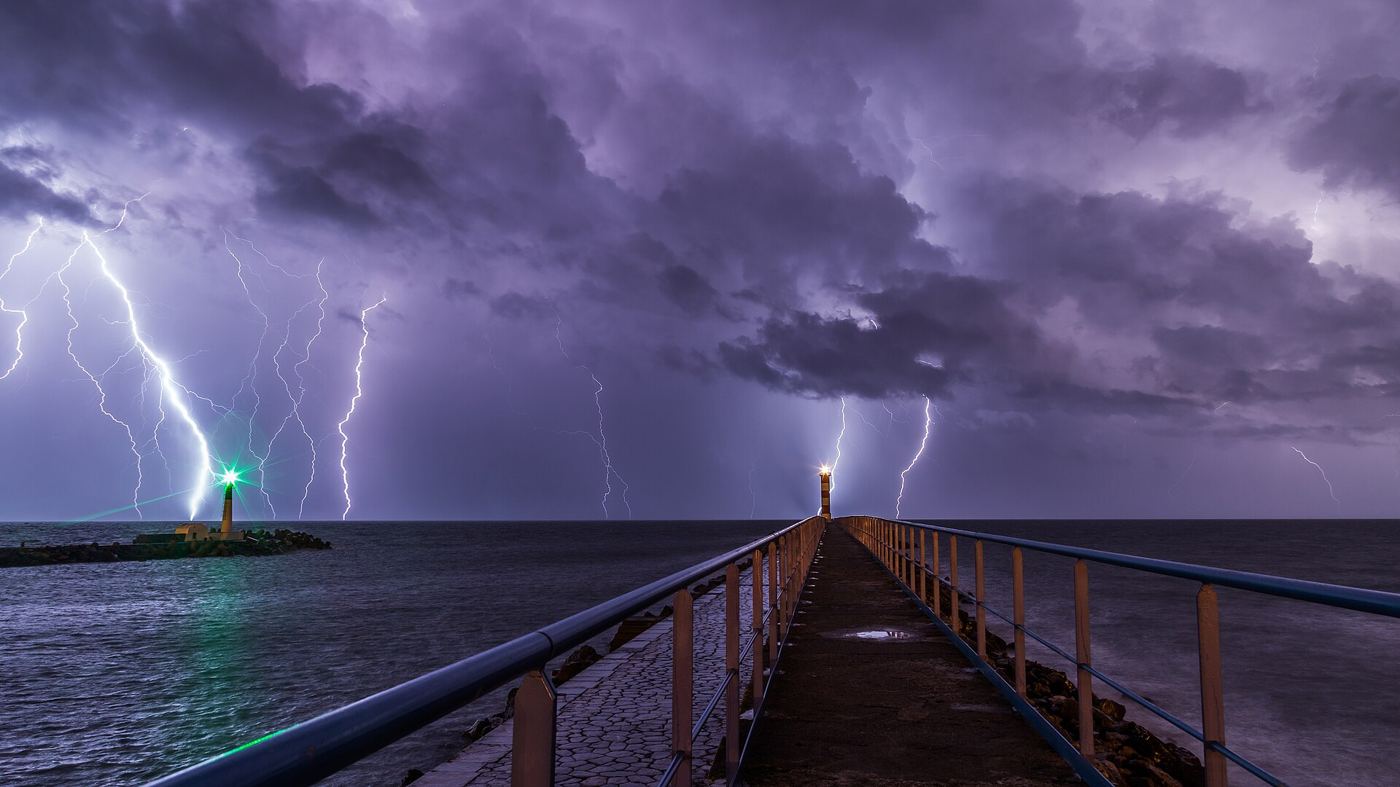
Every lightning flash announces itself in radio waves, and networks of ground sensors now listen for those signals to locate strikes within moments. When a flash fires, its electromagnetic pulse races outward and reaches several sensors at slightly different times; software compares the arrivals and calculates where the strike occurred. The resulting maps update continuously through a storm, showing where activity is intensifying, where it is moving and where it has stopped. Forecasters use the data to warn of severe weather, power companies watch for strikes near lines and equipment, and airports track storms approaching runways. What was once visible only to someone watching the sky is now measured as precisely as rainfall. The same live maps now appear in weather apps used by golfers, sailors, festival organisers and parents, bringing professional storm data into everyday decisions about staying outdoors.
What the Evidence Shows
The networks have improved as sensors, timing and computing have sharpened, distinguishing cloud-to-ground strikes, the kind that matter most for fire and safety, from flashes within clouds. That distinction helps fire services judge where new wildfires might smoulder after a storm passes, and helps investigators confirm whether a strike caused a particular outage or fire. Researchers also mine the archives, comparing years of strike data with rainfall and storm reports to understand how thunderstorms behave in different terrain and seasons. For the public, the most visible benefit is speed: warnings and all-clear decisions for outdoor events can rest on measured strike distances rather than guesswork about distant thunder. As coverage densifies in regions once unmonitored, forecasters expect the same benefits to reach communities that previously relied on watching the horizon and counting seconds after thunder. Reporting and analysis from sources such as Wired track the same developments, and specialists following lightning detection networks say the direction is now consistent across independent lines of evidence.
The Wider Context
The wider context is an industry learning to ship capability and restraint together. Products built around lightning detection networks now launch with safety evaluations, usage data and rollback plans as standard, because enterprise buyers and regulators ask for them in the first meeting. Companies that treated those questions as friction are discovering they have become the purchase criteria.
What Happens Next
What happens next for lightning detection networks depends less on another breakthrough than on the unglamorous work of reliability, pricing and support. The buyers evaluating it now are not enthusiasts; they are operators with budgets and auditors, and their checklists will decide the timeline. On the evidence of the current pilots, the technology has earned the right to be judged by them. You can follow related developments in our coverage of technology.
None of this will be settled by a single announcement, study or product launch. The pattern to watch is accumulation: independent confirmations, honest reporting of failures and steady improvement in the underlying numbers. Readers who follow those signals, rather than the loudest claim of the week, will understand this subject better than most of the commentary surrounding it suggests is possible.


